
Description
AI assisted research
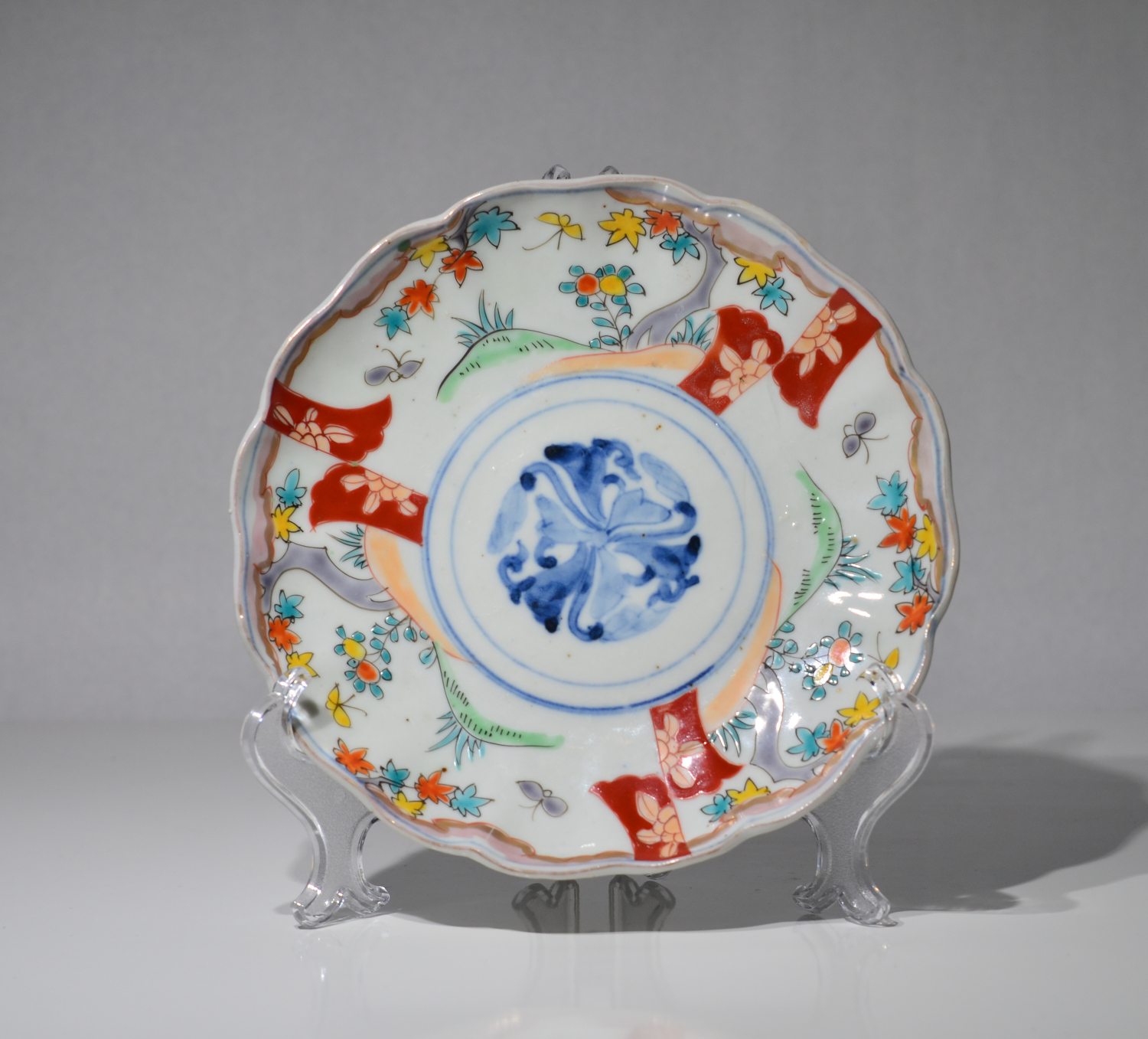
Technical Description: Japanese Arita Polychrome Dish
Object Type: Shallow Scalloped Dish (Namasu-zara / Mukozuke)
Origin: Japan (Hizen Province, Arita Kilns)
Period: Late 17th – Early 18th Century (Genroku/Kyoho Eras, c. 1690–1715)
Dimensions: 7.5 inches (19 cm) diameter
- Decorative Palette & Mineralogy
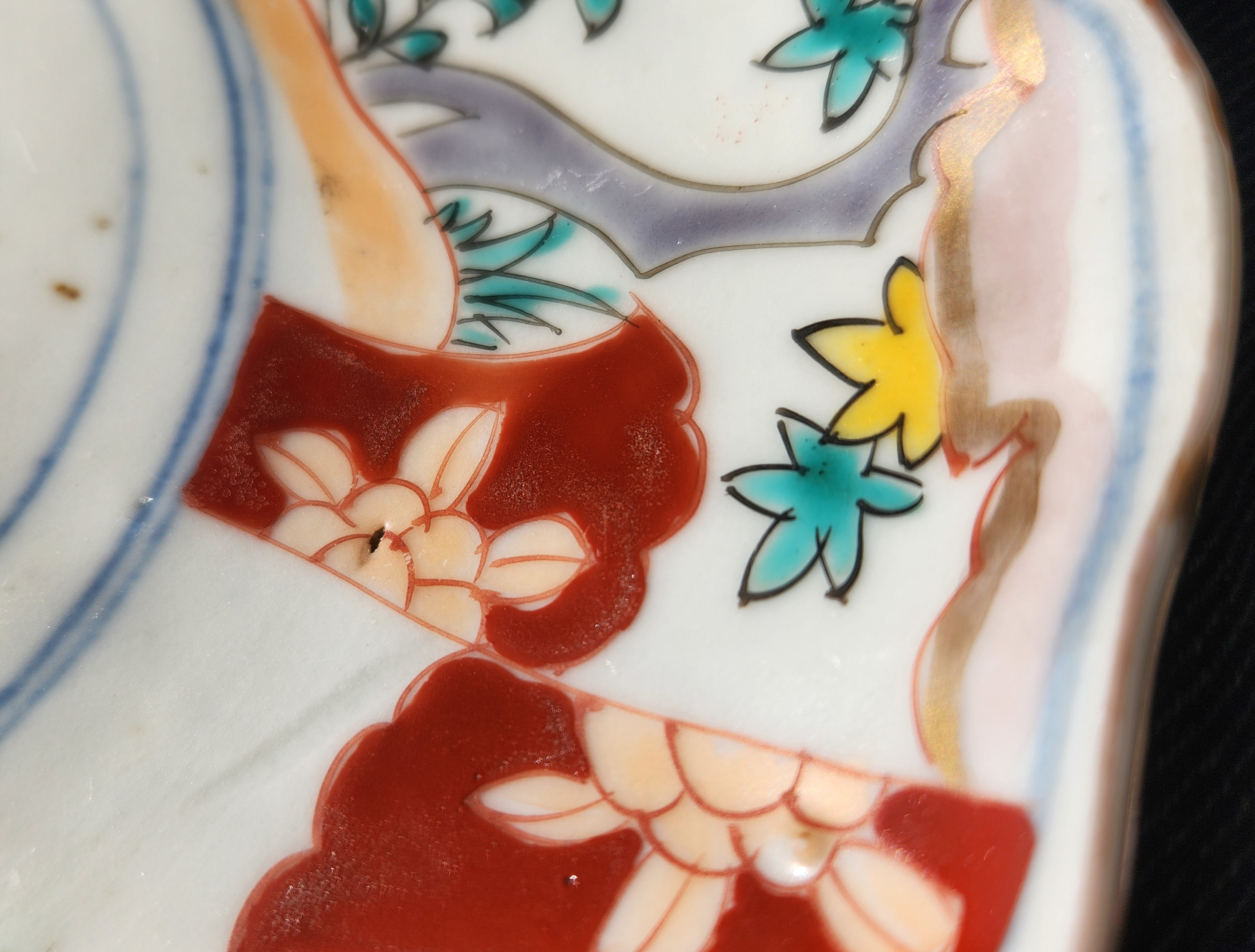
The piece utilizes the classic “Five-Color” (Itsutsu-iro) palette characteristic of high-period Arita polychrome wares.
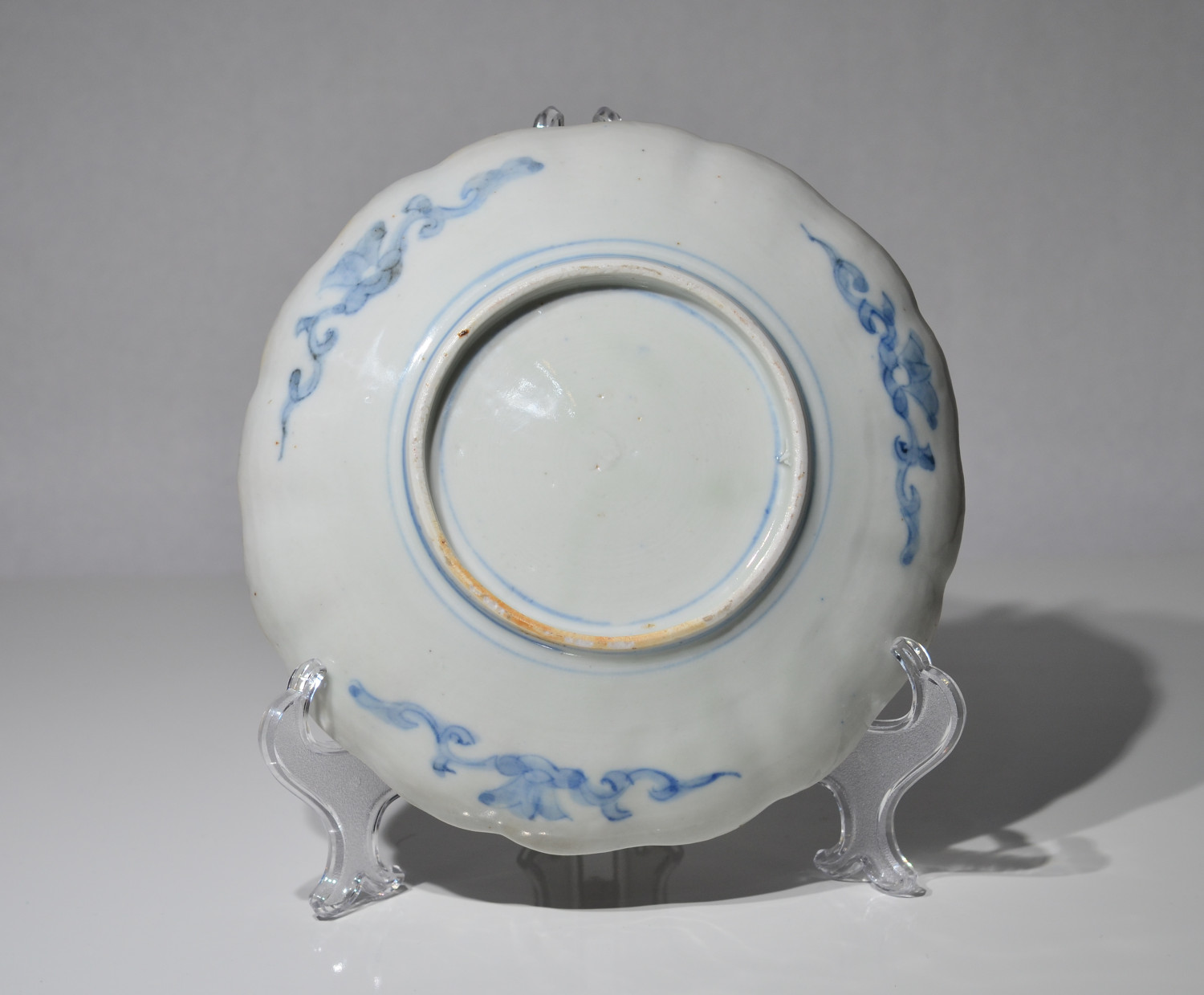
- Underglaze Blue: Executed in natural local cobalt (Gosu). The pigment exhibits characteristic “soft” or “blurred” edges due to high-heat dispersion in the Grand Feu firing. Significant mineral “heaping and piling” (darker iron/manganese freckling) is visible within the brushstrokes, confirming the use of hand-ground ore rather than refined industrial cobalt.
- Manganese Lavender (Murasaki): A rare, translucent violet enamel used for the tree trunk. The application is a “wash” style, typical of the Genroku period’s move toward painterly atmospheric perspective.
- Copper Turquoise (Aogusuri): A lead-fluxed copper enamel featuring internal gaseous bubbling and a network of microscopic crazing. These features are diagnostic of early 18th-century kiln chemistry.
- Gold-on-Pink (Kinrande): The rim and floral highlights feature pure gilding applied over a gold-derived pink enamel base. This “layered” technique was used to provide depth and warmth to the gold; the pink base often appears flush with the glaze, whereas the iron-red elements sit in slight relief.
- Iron Red & Antimony Yellow: The 7-lobed maple leaves (Momiji) are rendered in a warm, coral-toned iron red and bright antimony yellow, characteristic of the Kakiemon-influenced aesthetic.
- Structural Hallmarks
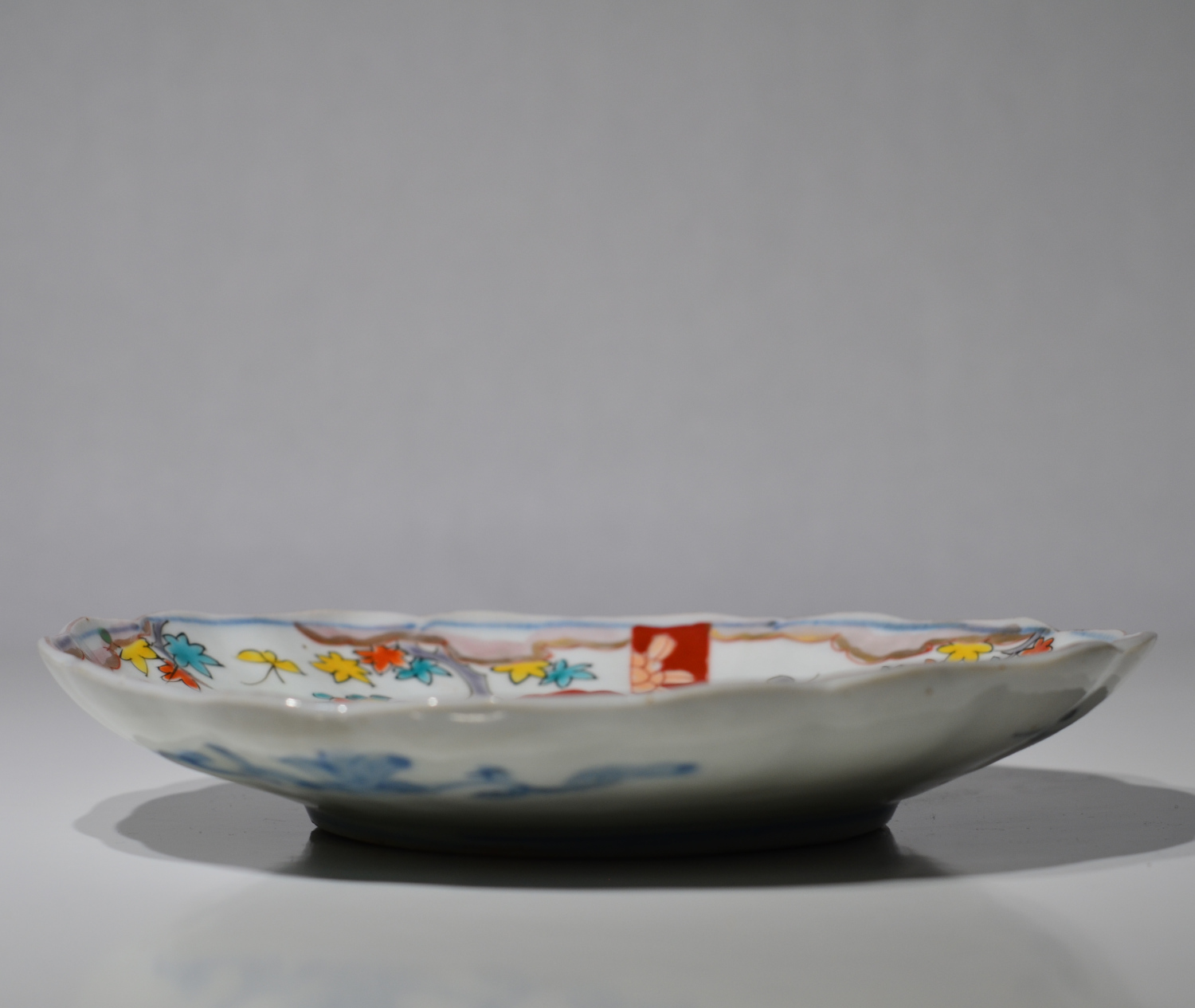
- Form: Scalloped/lobed rim mimicking a floral silhouette. The profile is shallow with a gentle “warping” or kiln-slump, indicative of an uneven cooling process in a traditional wood-burning climbing kiln (Noborigama).
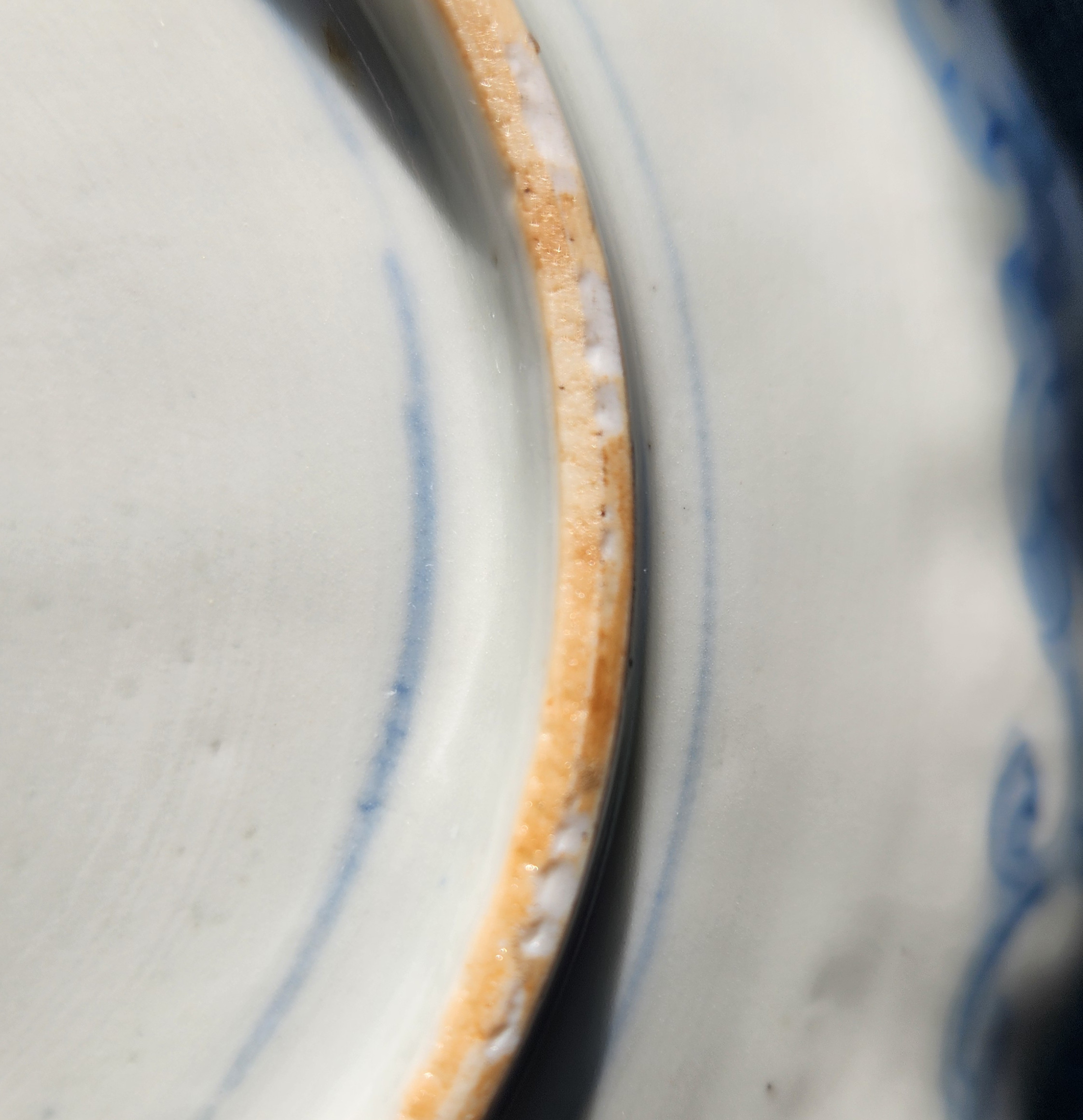
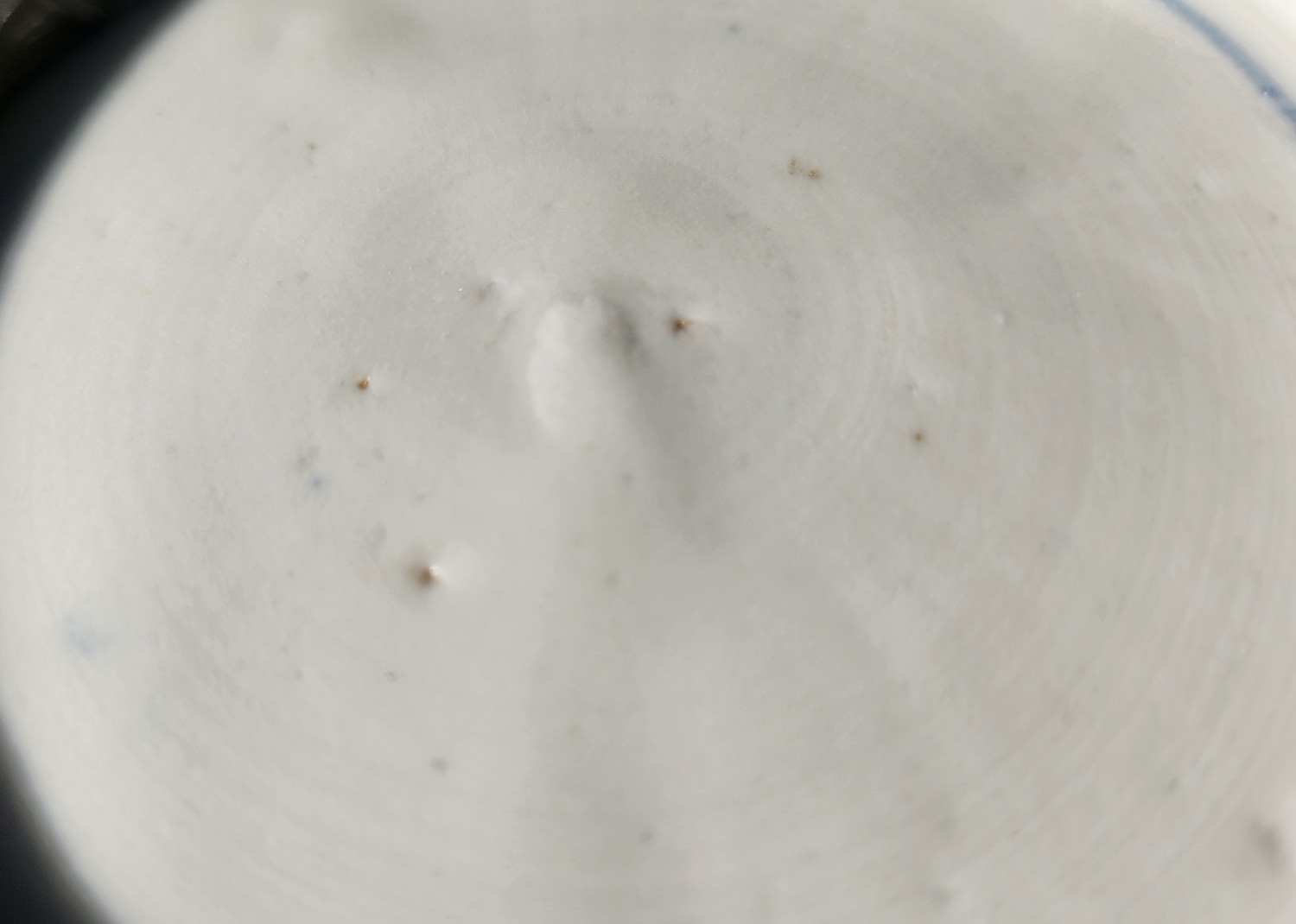
- Base Construction: The reverse features a prominent central protrusion (nipple), a hallmark of hand-turned finishing on a potter’s wheel. Concentric throwing rings are visible through the glaze.
- Glaze: The body is covered in a thick, slightly blue-tinted white glaze (reminiscent of the Nigoshide “rice water” tone) with occasional pinholes and minor iron “flea bites,” consistent with pre-industrial porcelain production.
- Curatorial Note
This piece represents a sophisticated transition between the delicate Kakiemon style and the more opulent “Gold Brocade” (Kinrande) Imari. The 7-lobed accuracy of the maple leaves and the rare use of manganese for the arboreal elements suggest a piece intended for the domestic Japanese aristocracy or high-level VOC (Dutch East India Company) trade.


Reviews
There are no reviews yet.