
Description
AI assisted research:
Object Name: Kōgō (Incense Box)
Classification: Ko-sometsuke (Old Blue and White)
Origin: China, Jingdezhen kilns; manufactured for the Japanese market
Period: Late Ming Dynasty, Tianqi/Chongzhen era (c. 1620–1645)
Material: Porcelain with underglaze cobalt blue (gosu)
Size: 2 inches wide by 2 inches deep by 1.5 inches tall (approx.)
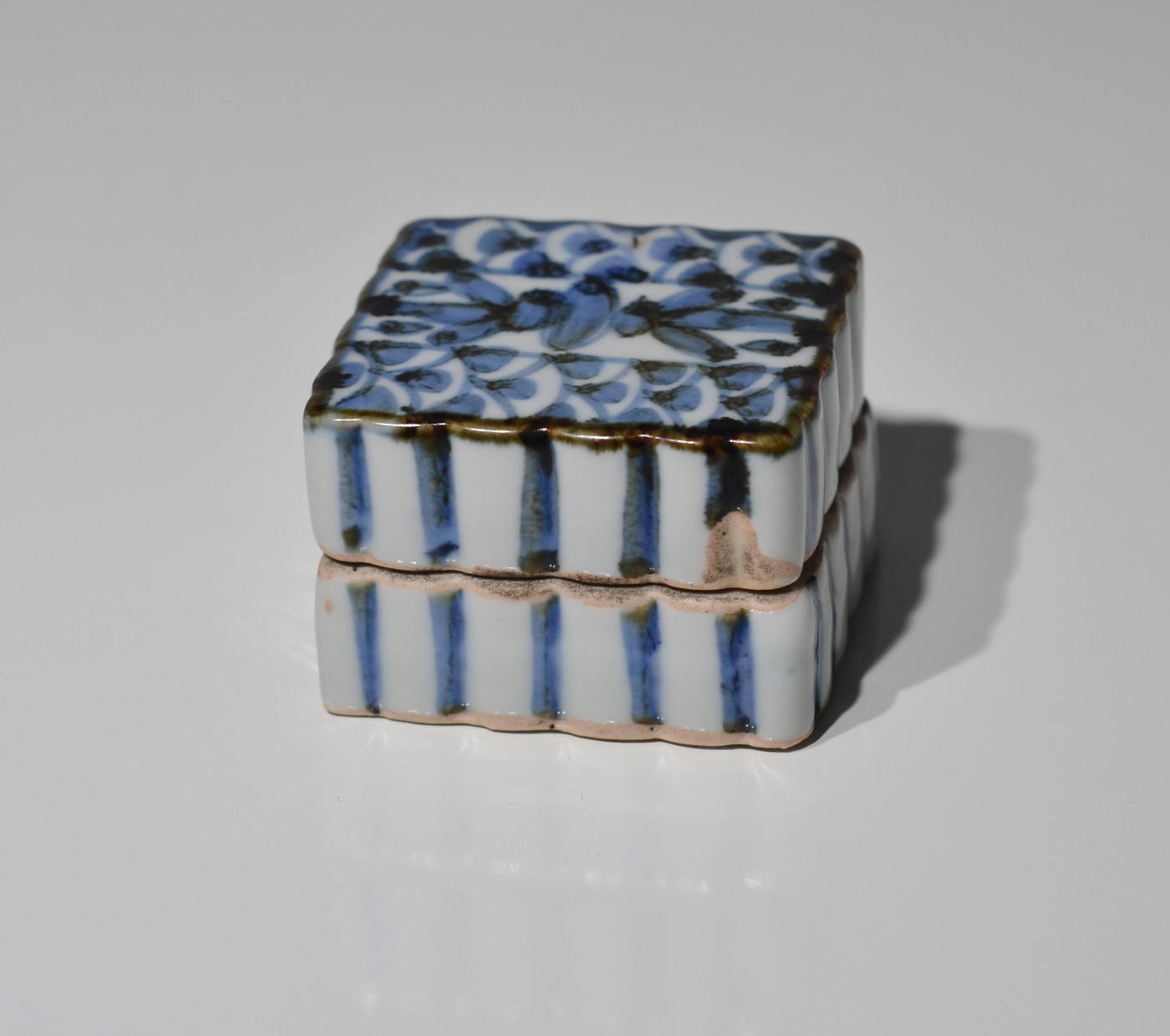
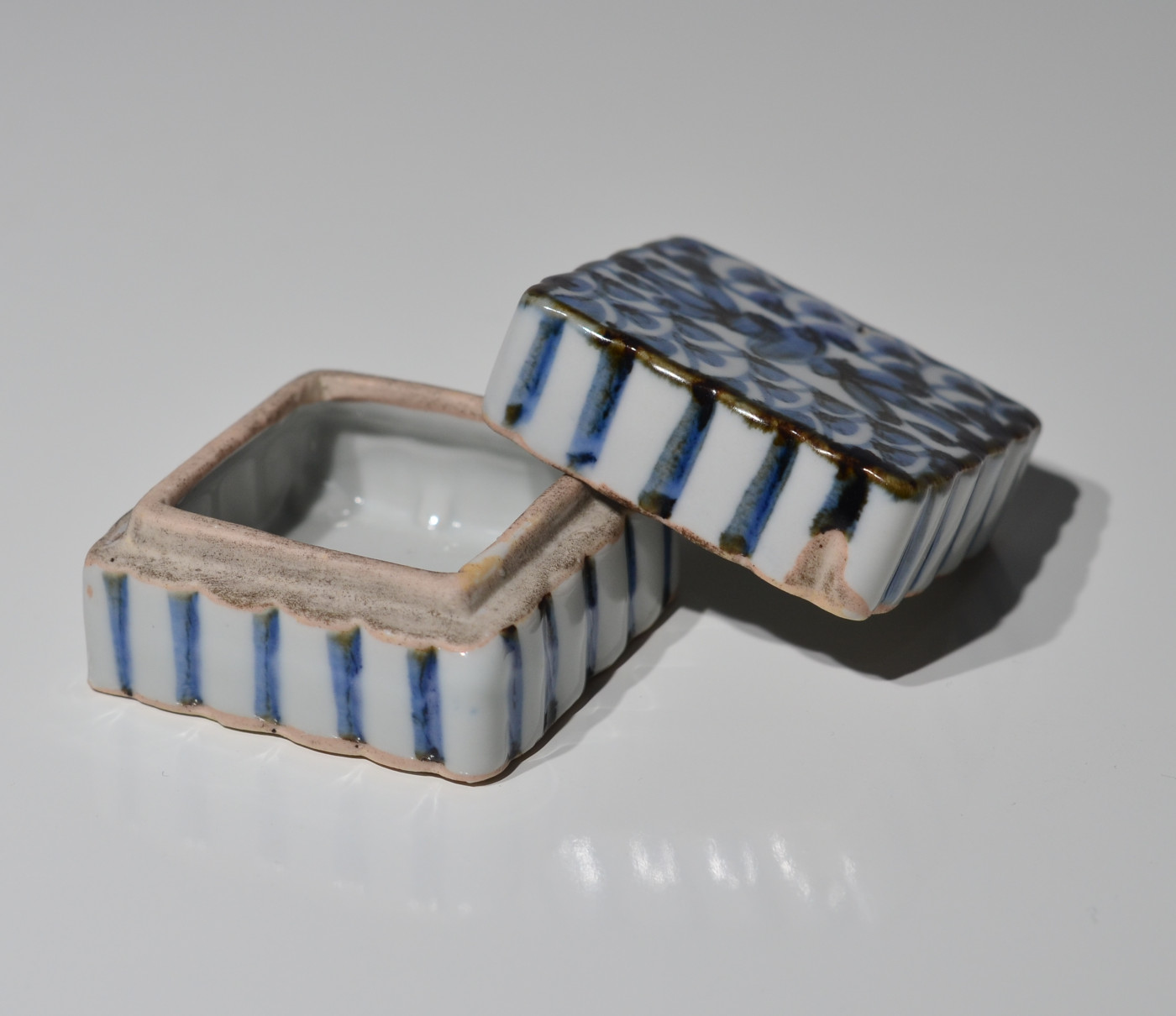
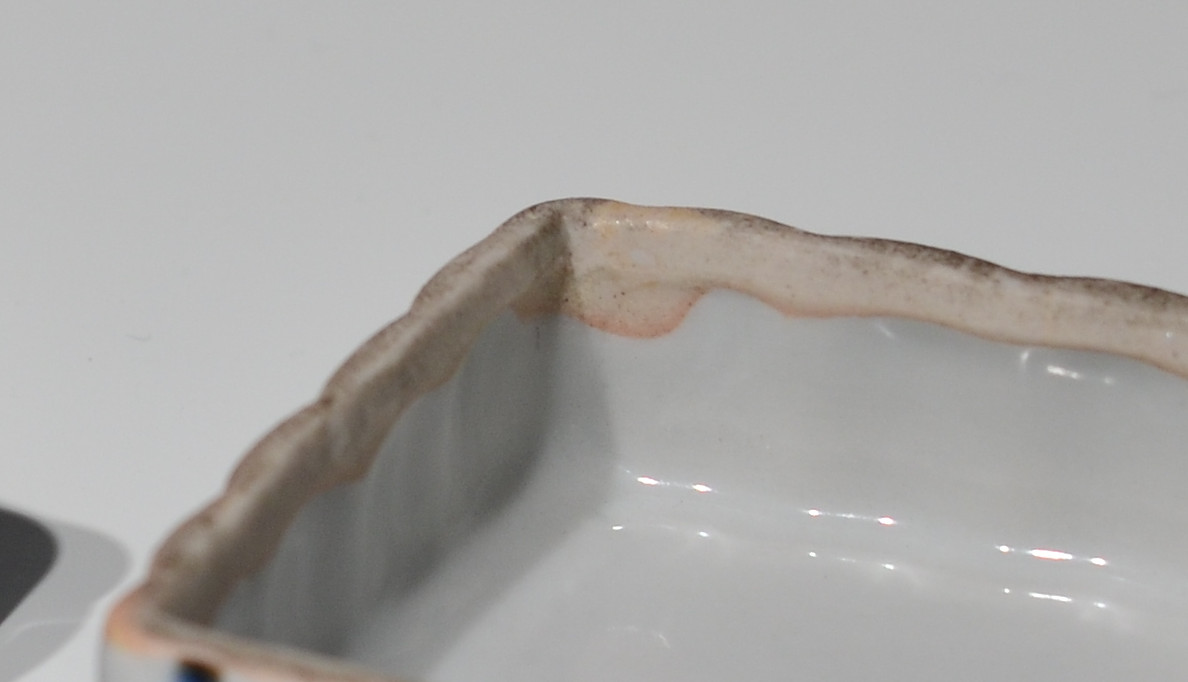
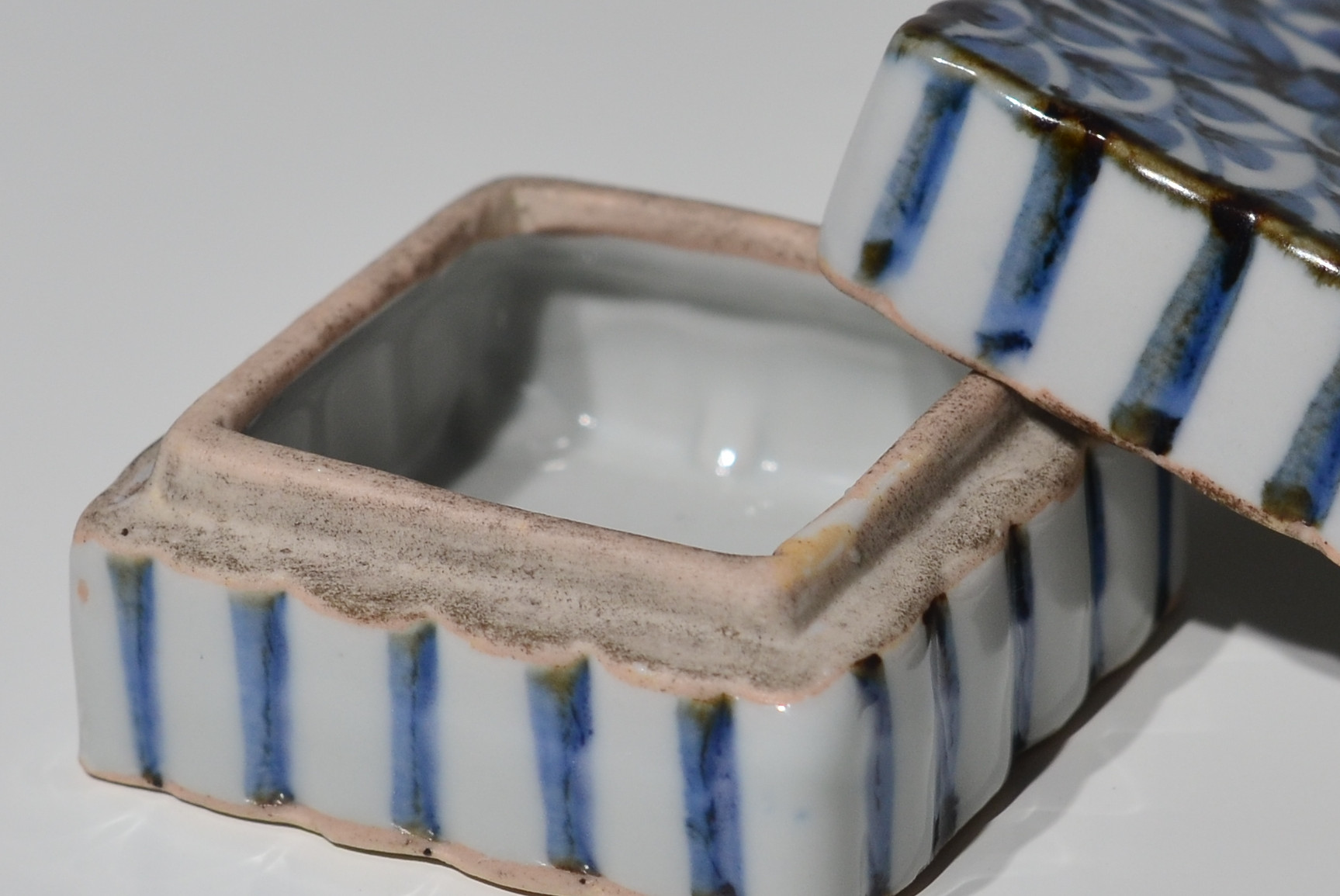
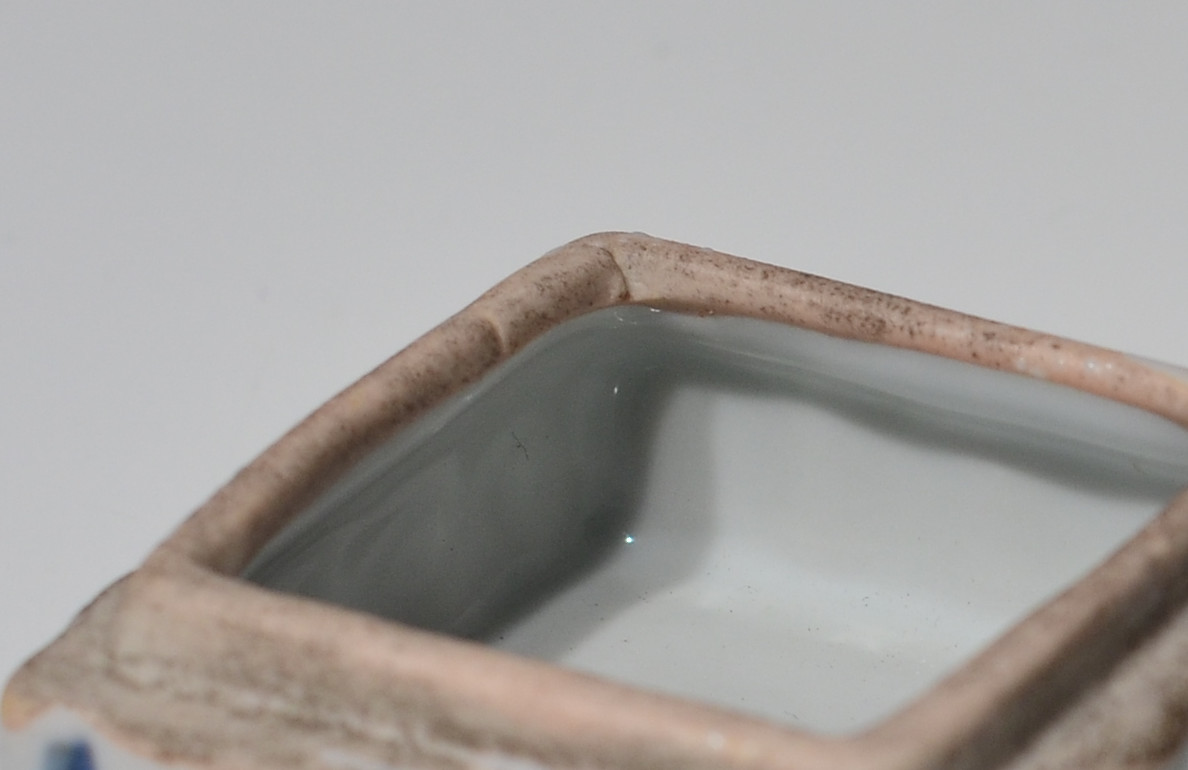
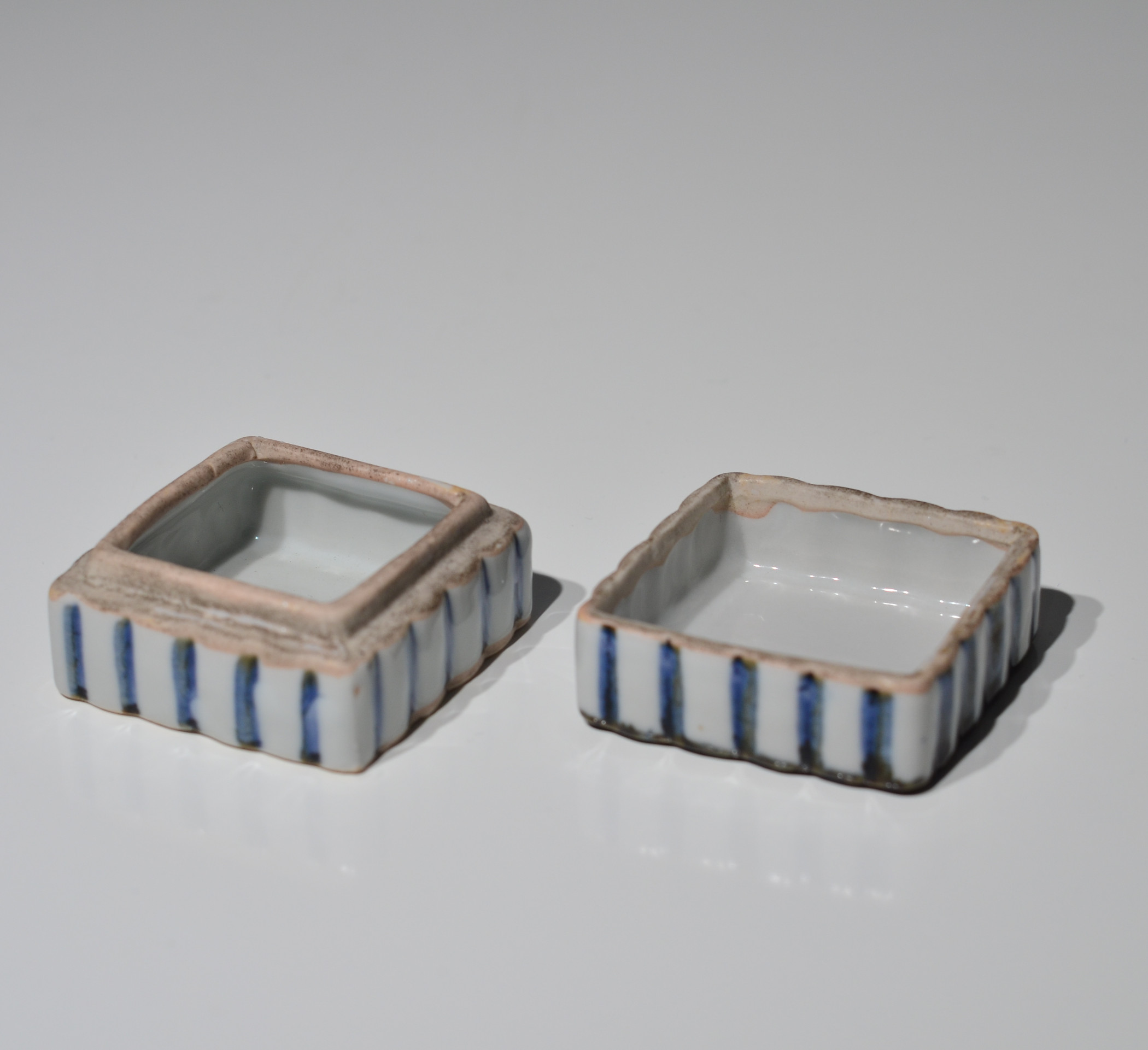
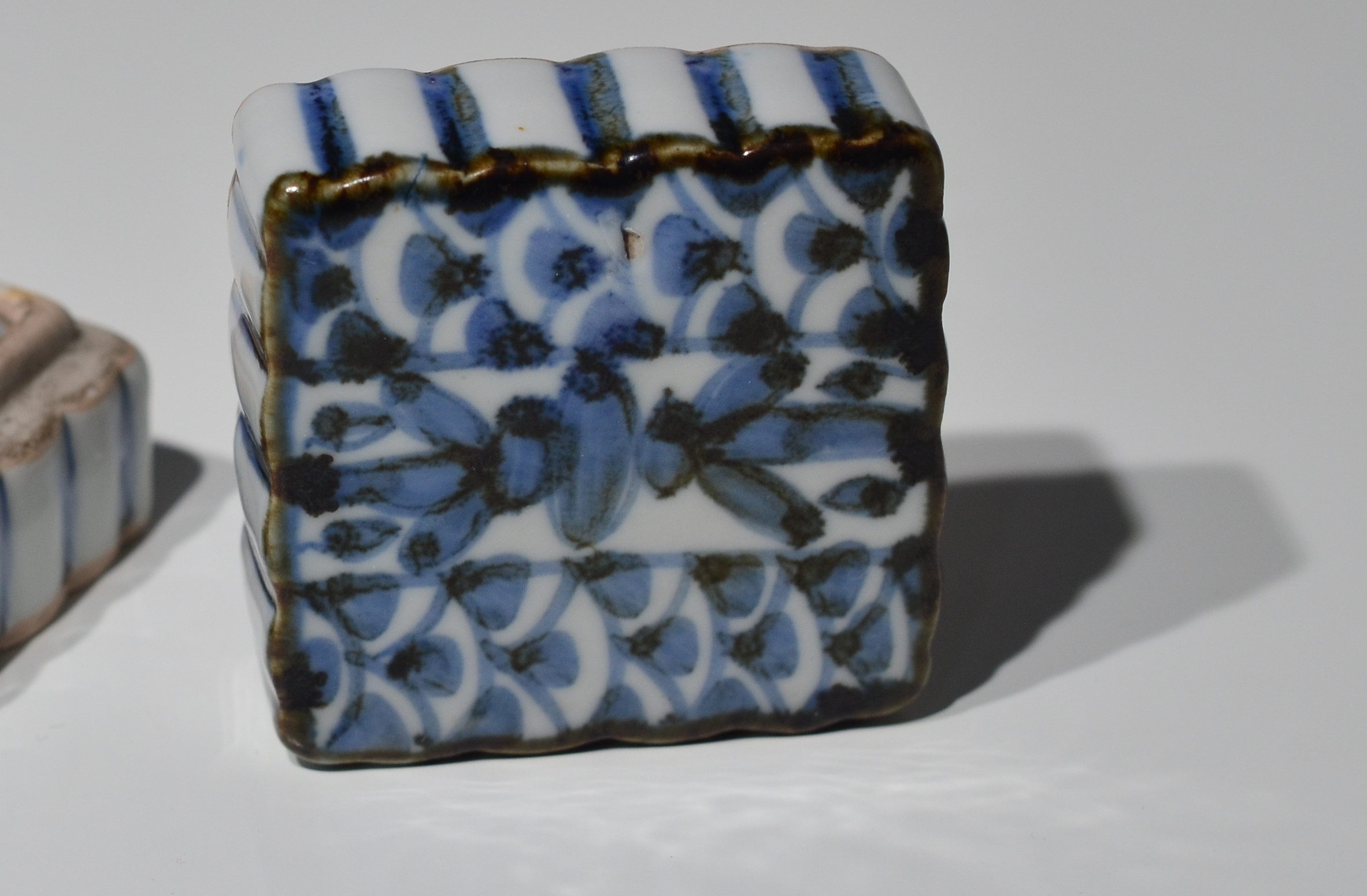
Description: A small, square porcelain incense box of rinka (fluted) form, specifically designed for the Japanese tea ceremony (chanoyu). The lid is decorated in underglaze blue with a stylized seigaiha (wave) pattern, while the fluted sides feature alternating vertical blue and white stripes. The upper rim of the box is finished with a thin dressing of brown iron-oxide slip, known as kuchi-beni (“mouth rouge”), a technique used to provide a decorative border and protect the glaze from flaking.
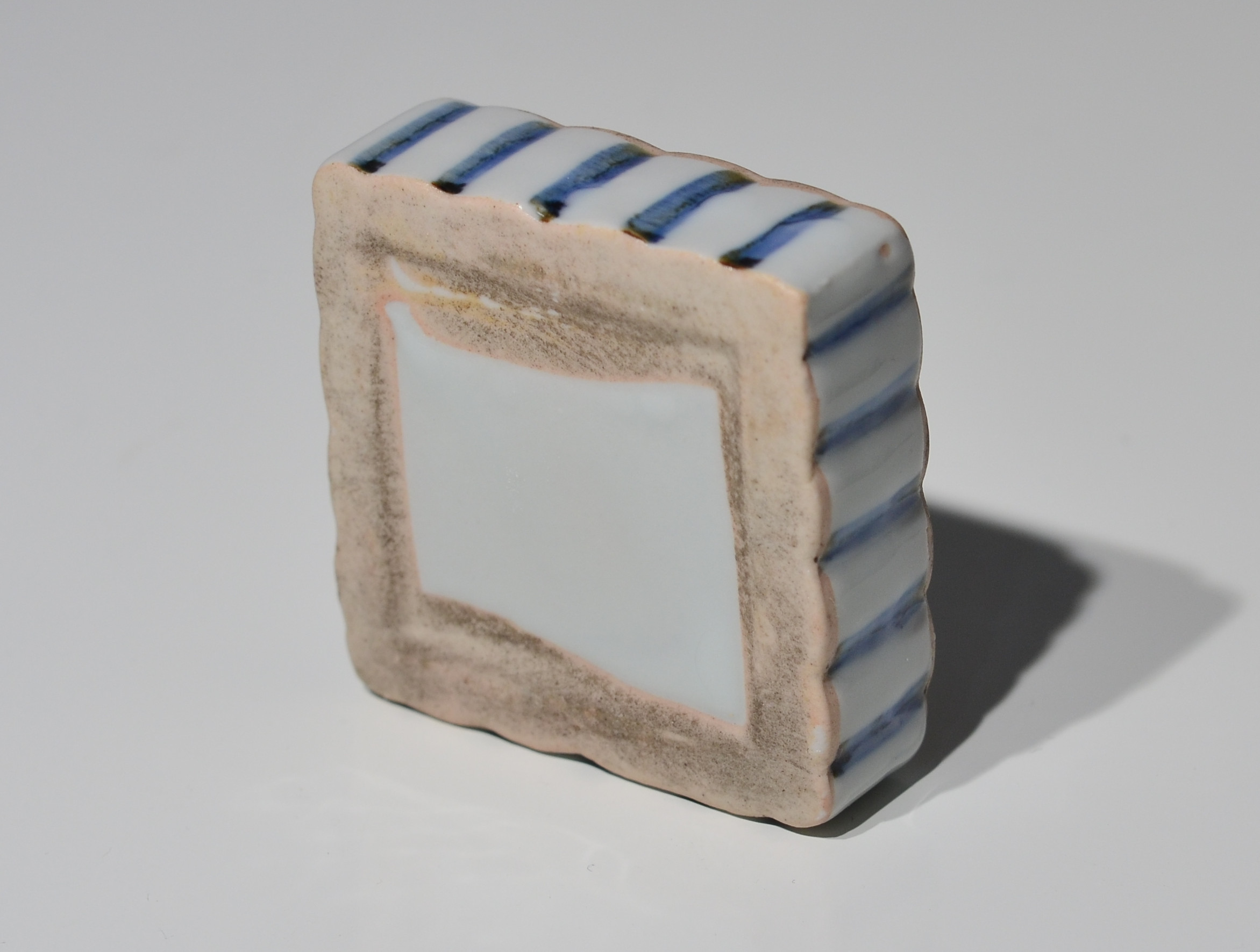
Technical Observations: * Glaze Crawling & Pigment Drag: The exterior exhibits a prominent instance of glaze crawling on one fluted ridge. This “accident of the kiln” resulted in “pigment drag,” where the retreating molten glaze physically lifted the cobalt pigment from the clay body, leaving a clean patch of bare clay and a concentrated dark line of blue at the glaze’s edge.
- Base and Footrim: The underside features a glazed, roughly defined square footrim. Consistent with Ko-sometsuke production. Glaze crawl is also evident.
- Oxidation Flashing: A distinct pink-orange “halo” or flashing is visible at the interface between the glaze and the exposed clay on both the base and the sides, caused by iron impurities in the clay oxidizing during the firing process.
Aesthetic Context: This piece exemplifies the wabi-sabi aesthetic favored by 17th-century Japanese tea masters. The intentional rusticity—seen in the rough potting, the “worm-eaten” potential of the edges (mushikui), and the acceptance of firing irregularities—distinguishes this Chinese-made ware from more refined contemporary export porcelains.


Reviews
There are no reviews yet.