Note: Research was done with some assistance from AI. AI makes mistakes.
Japanese Copper Red and Iron Green Under Glaze
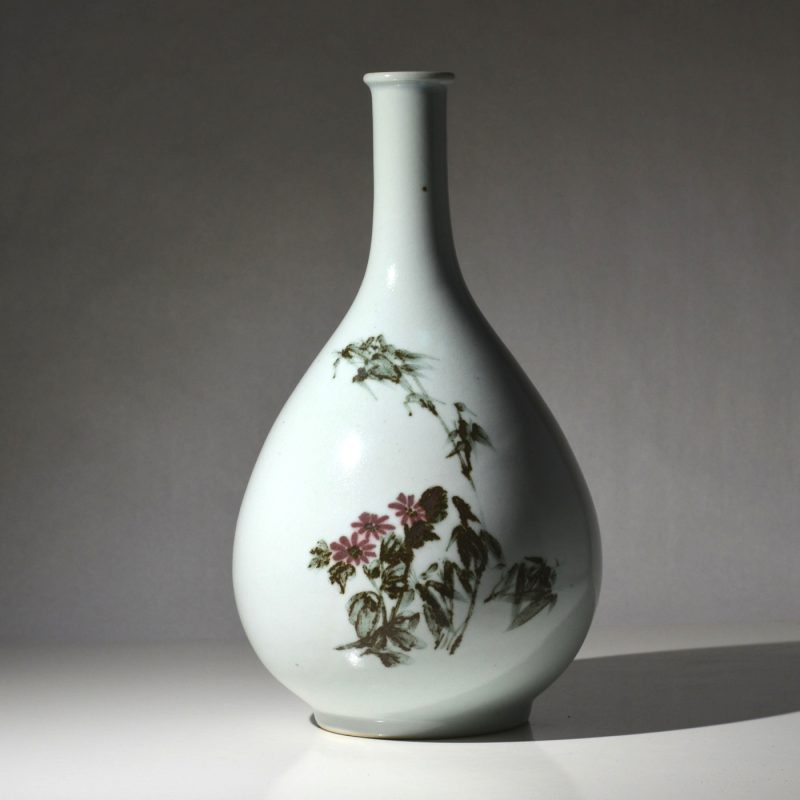
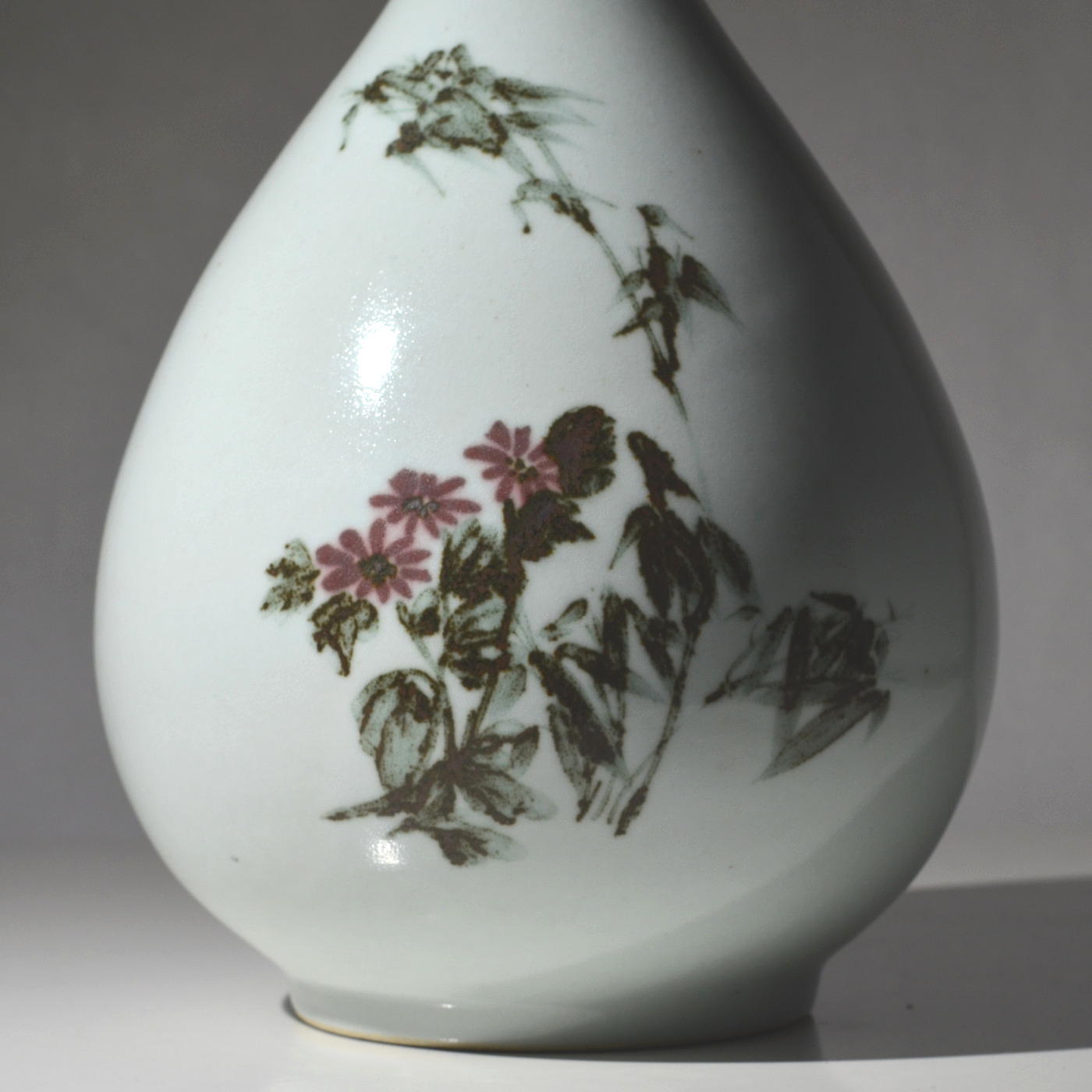
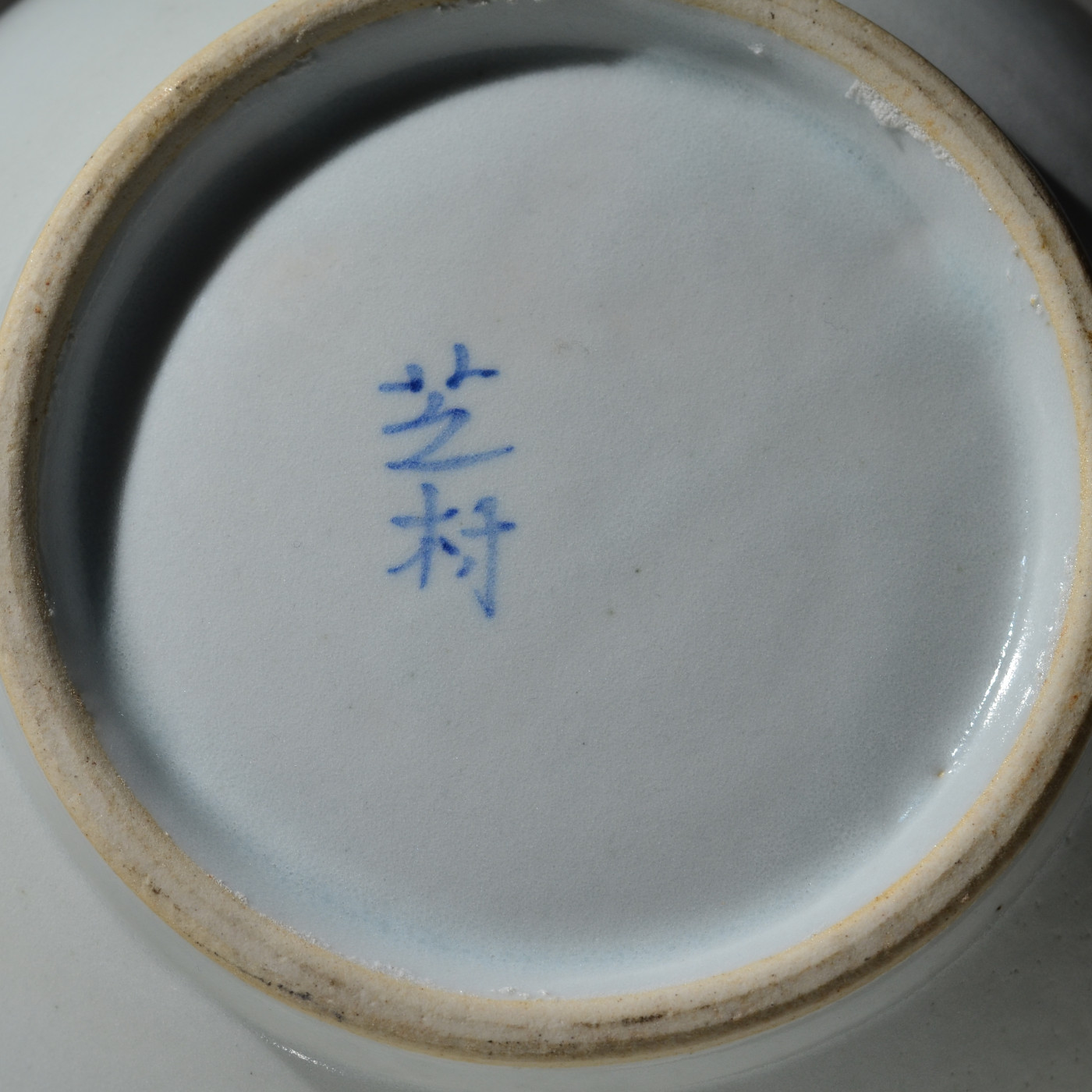
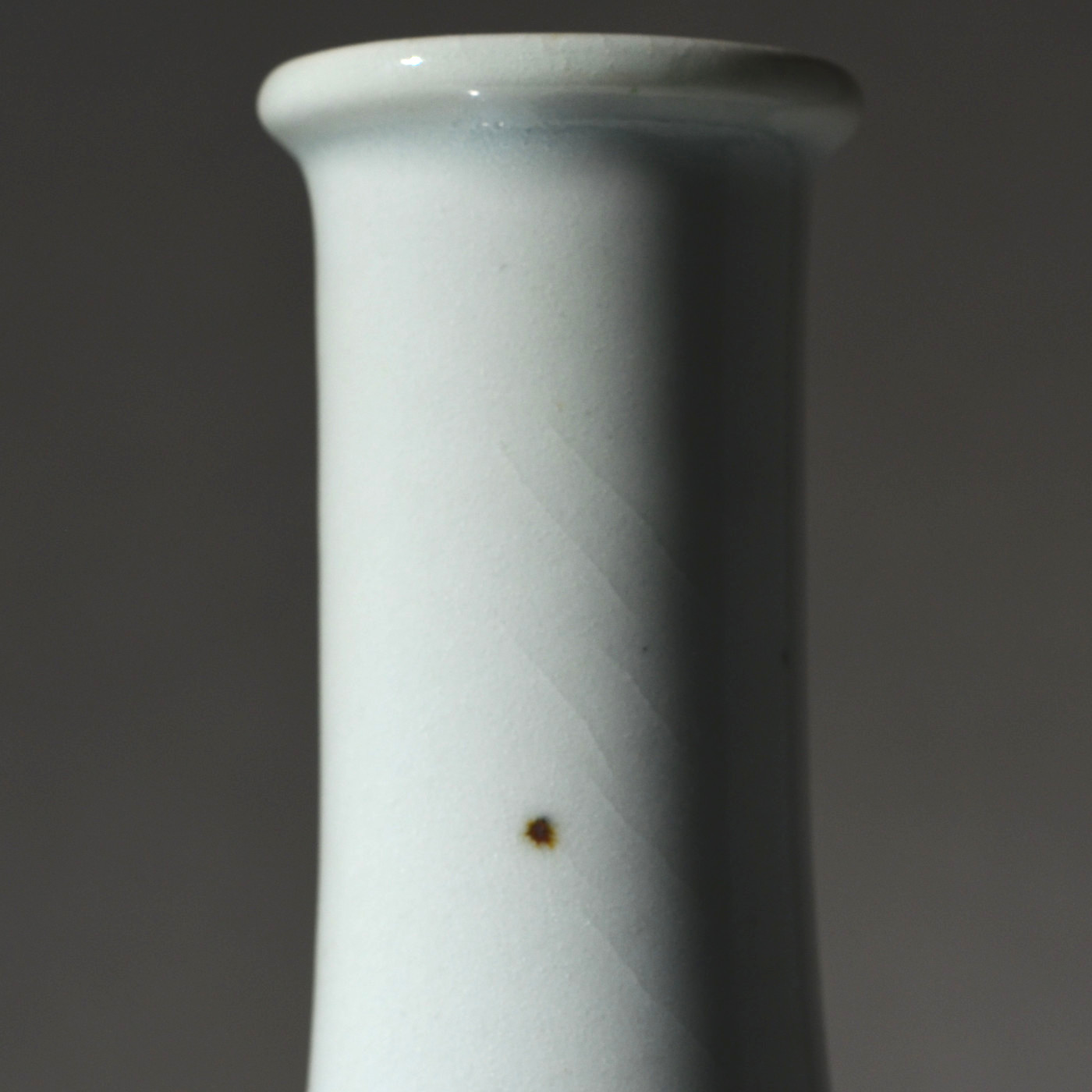
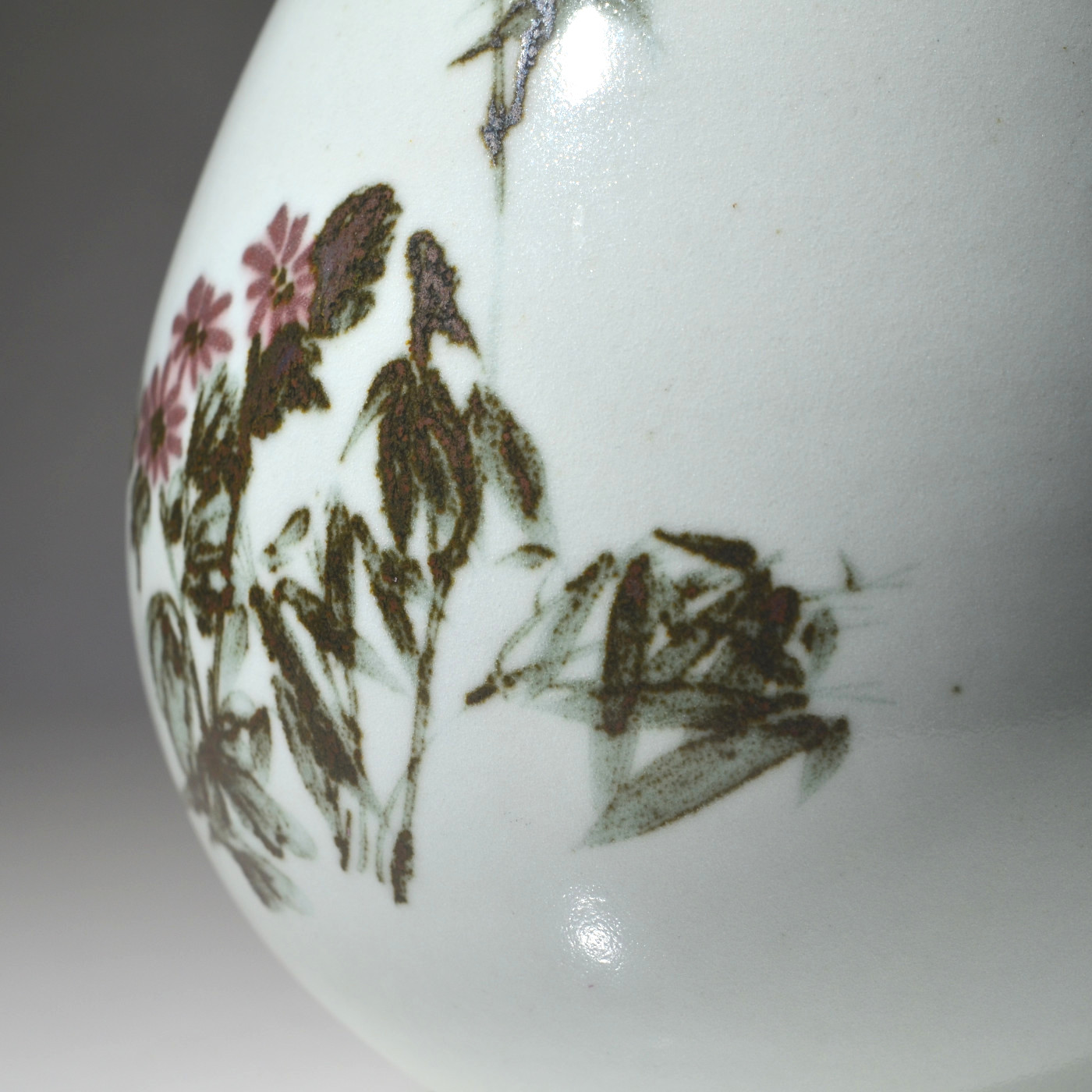
a few first impression. This is a large vase. It is approximately 14 inches (35.5 centimeters) tall. It is a heavy vase, stoutly and expertly potted. It has a large, sturdy base. The glaze has a light green tint and is thickly applied. The glaze is densely filled, through its entire depth, with gas bubbles of varying sizes. These bubbles give the surface of the glaze a very nice, and desirable, orange peel surface. The glaze exhibits one large and some small iron inclusions along with small flecks of kiln ash, evidence of it origins. Images of the interior confirm the vase was hand thrown on a wheel, as grooves from the potter’s fingers are clearly evident. On the base is a large and confident signature of Shibamura in under glaze cobalt blue. The foot rim exhibits a small amount of kiln grit, additional evidence of the vase’s origins.
Underglaze Signature of Shibamura (芝村)
The family name Shibamura is a relatively rare family name in Japan. Unfortunately, our research has found no potter, with this name, working at this level of expertise. The rarity of the name and the quality of the piece, tempts us to consider other options for how this artwork was born. Unfortunately we do not have a tomobaku, signed wooden box, to help us.
So let’s jump right in. Remember, what follows is research work, evidence and case building. The reader is free to form their opinion and share it below.
The vase shows methods of production consistent with two theories, 1. The vase was made before electric kilns and mass produced molding of pieces. 2. The vase is possibly from a more recent work shop (studio) using traditional methods, wheel thrown and wood fired. The stress crazing lines on the neck, in a spiral pattern are proof of the vase being thrown on a wheel. Small flecks of ash in the glaze, grit on the foot rim and the frothy glaze with orange peel texture, point to a wood fired kiln. We also know the kiln was reduction fired (low or no oxygen). Copper red fires to green in an oxygen rich firing and iron green turns brown in the presents of oxygen. The difficulty and expertise needed to accomplish this firing cannot be overstated.
Examining the decoration we find a beautiful, minimalist work of art. Red chrysanthemums (imperial crest of Japan) and bamboo adorn the vase. Bamboo stems seem to fade into the mist and then reappear in a method reminiscent of dry ink scroll painting techniques of the Shijo school. The painter omitted harsh outline strokes, relying instead on graded washes of color to define form.
Ceramics and paintings done in this style are for domestic appreciation, not for export, at least not during the late Meiji Era, the time period we believe this vase comes from. We also believe it originated in a Kyoto studio.
In late Meiji and Taishō Kyoto, elite ceramicists routinely hosted master painters to decorate custom, high-end blanks. We feel only one painter, in that time frame, meets all the criteria outlined, Shibamura Gyokugetsu (芝村 玉月)