
Description
(AI Generated)
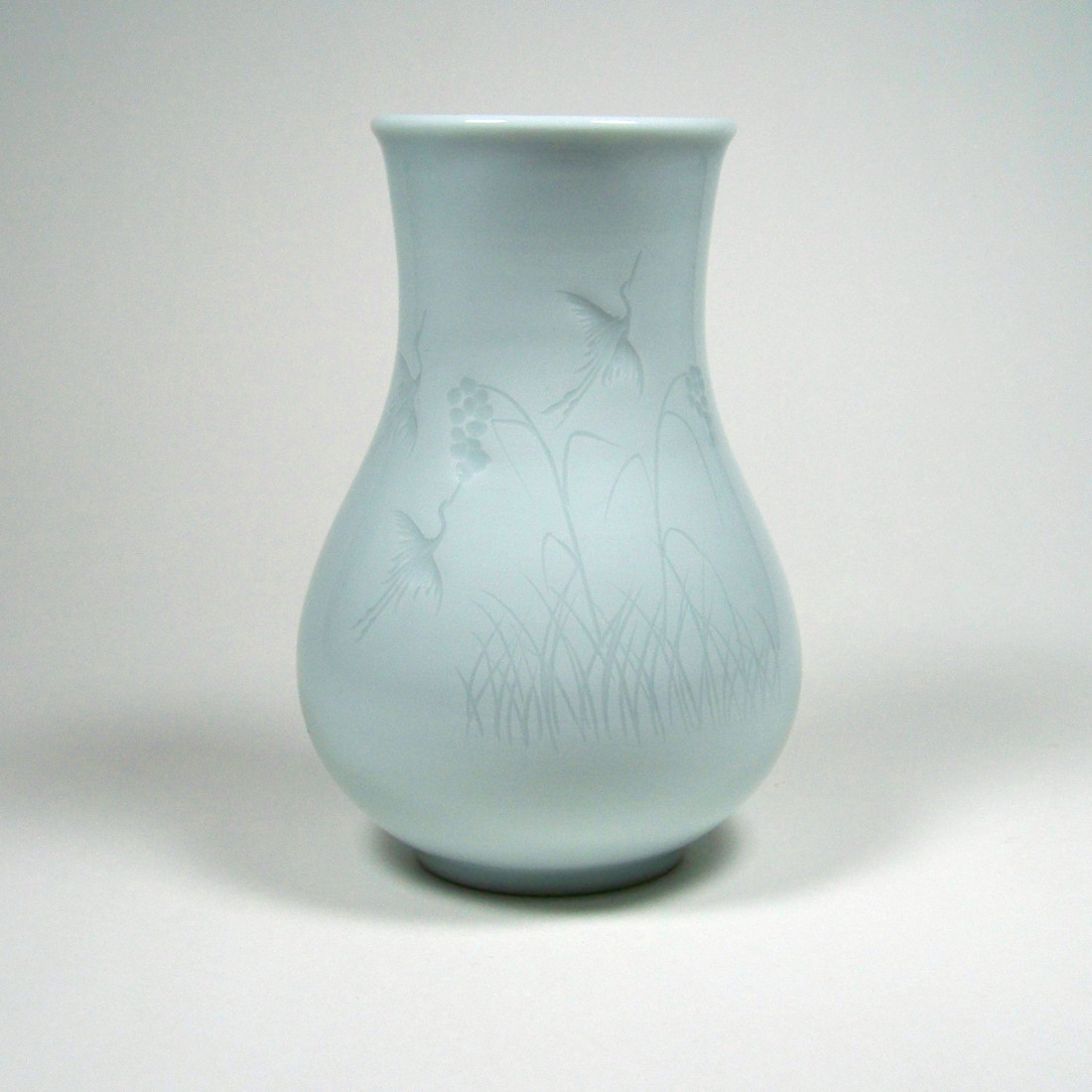
This is an exquisite piece of modern Korean Celadon (Cheongja), likely from the mid-to-late 20th century. It captures the spirit of the Goryeo Dynasty (918–1392) while utilizing the refined techniques of the contemporary revival period.
The Artist Mark
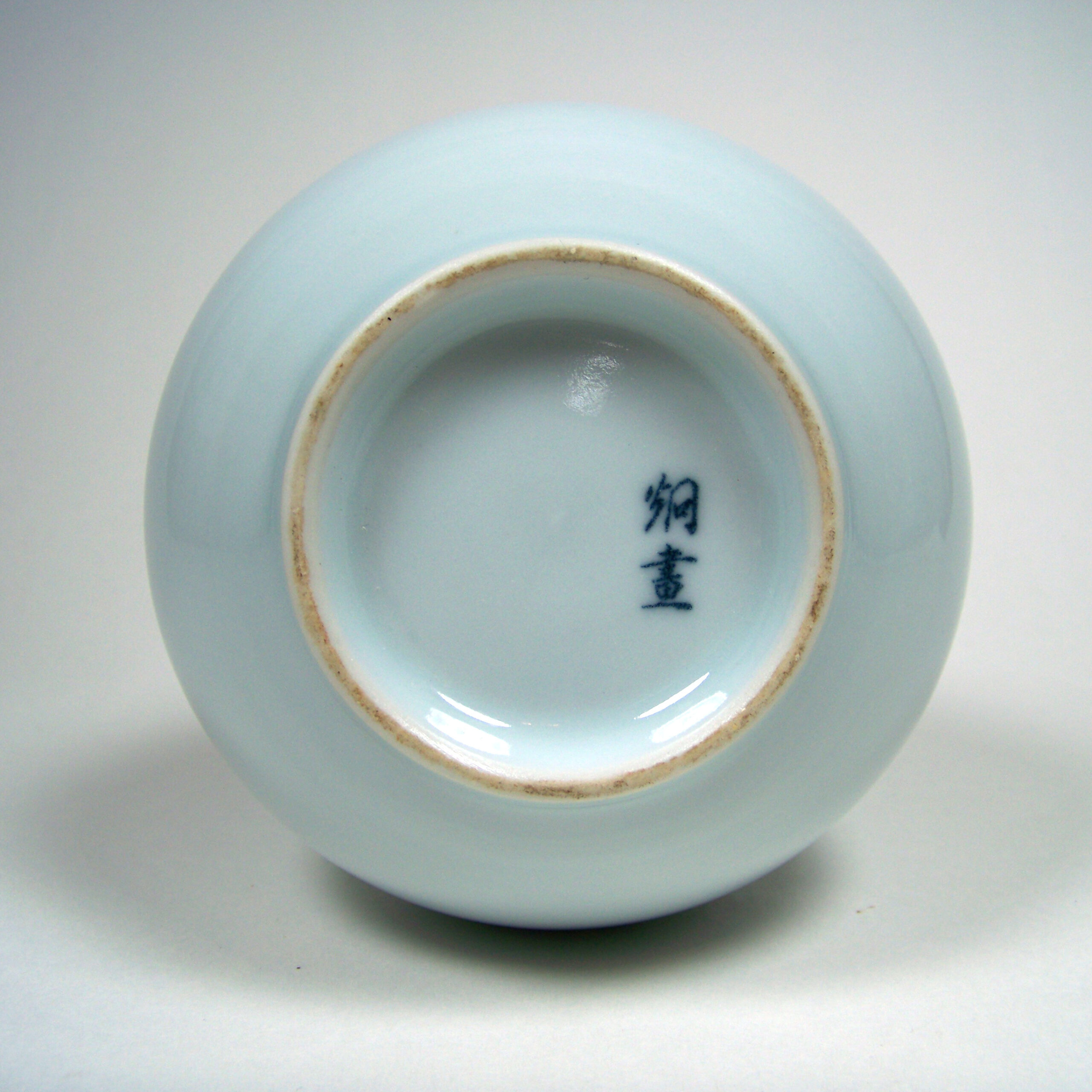
The signature on the bottom consists of two Hanja characters: 絅畫 (Gyeong-hwa / 경화).
-
絅 (Gyeong): This is a relatively rare character, often meaning “plain” or “unadorned garment.”
-
畫 (Hwa): This translates to “painting” or “made by,” a common suffix for Korean and Chinese artist signatures.
While “Gyeong-hwa” isn’t as globally famous as masters like Yu Geun-hyeong (Hae-gang), the quality of the incised work and the clarity of the glaze suggest it came from a high-end studio in a famous pottery region like Icheon.
The Glaze: “Clair de Lune”
The glaze is a stunning Clair de Lune (French for “moonlight”). In Korea, this is a specific pale-blue variant of celadon. Unlike the traditional “kingfisher green” of earlier Goryeo pieces, this “sky blue” glaze is achieved through a very delicate reduction firing with a tiny amount of iron oxide (typically less than 1%). The result is a watery, ethereal finish that seems to glow from within.
The Motif: Cranes and Grasses
The decoration features finely incised (not inlaid) motifs of cranes flying amidst tall grasses or reeds.
-
Symbolism: In Korean culture, the crane (hak) is a symbol of longevity, nobility, and the “scholar’s spirit.”
-
Technique: The lines are extremely crisp, visible beneath the glaze. This is often done by carving into the clay body when it is “leather-hard” before the first firing.
Form and Aesthetic
The vase follows a classic baluster shape—a rounded body with a cinched neck and a gracefully flared rim. The lack of heavy crackling (crazing) in the glaze is a hallmark of high-quality modern production, aiming for the “perfect” unblemished surface that 12th-century potters strived for but rarely achieved at this scale.
The mark 絅畫 (read as Gyeong-hwa) identifies this as a work from the Gyeong-hwa Kiln (경화요), headed by the master potter Kim Gyeong-sik (김경식).
About the Potter: Kim Gyeong-sik
Kim Gyeong-sik is a highly respected ceramic artist based in Icheon, South Korea’s premier center for traditional ceramics. While many Goryeo-style potters focus on the darker “kingfisher green” celadon with heavy white and black inlay (sanggam), Kim Gyeong-sik is renowned for this specific aesthetic:
-
The “Clair de Lune” Specialist: He is one of the modern masters who perfected the pale, ethereal blue glaze seen on your vase. It requires an incredibly precise firing temperature and atmosphere to prevent the glaze from turning too green or yellow.
-
Engraving over Inlay: His hallmark is the use of incised (engraved) decoration. Instead of filling the lines with different colored clays, he relies on the depth of the carved line to catch the pooling glaze. This creates a subtle, shadow-like effect for the cranes and reeds that feels more “painterly” and fluid.
-
The Signature: The use of 畫 (Hwa, meaning “drawing” or “painting”) in his mark is a personal stylistic choice, emphasizing that the decoration on the vase is treated with the same artistic intent as a traditional ink painting.
Vases from the Gyeong-hwa Kiln are considered high-end “Studio Celadon.” They are not mass-produced souvenirs; they are collector’s pieces often found in galleries and high-end department stores in Seoul like Shinsegae or Lotte.
This piece is a particularly fine example because the “moonlight” blue is very even across the entire body, and the crane motifs are balanced—not overcrowded—which is a sign of a mature artistic hand.
Reviews
There are no reviews yet.